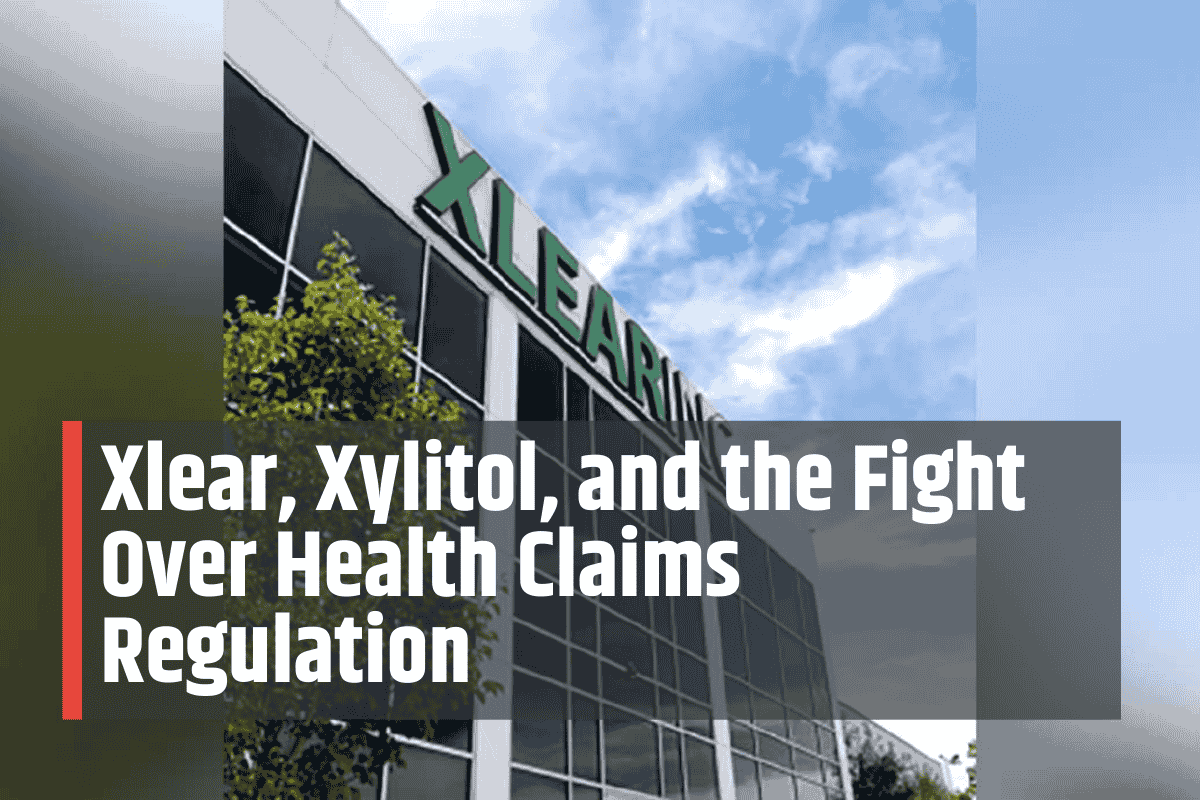
Nathan Jones, founder of Xlear, is a passionate advocate for xylitol. He credits the natural sweetener with benefits beyond dental health, including potential roles in fighting chronic diseases.
But federal rules prevent him from advertising those claims — a limitation he is now challenging in court.
Xlear’s Lawsuit Against the FTC
Xlear has sued the Federal Trade Commission (FTC), seeking to overturn long-standing requirements that health product marketers provide substantial evidence to back their claims.
If successful, the lawsuit would dramatically alter how companies advertise supplements, potentially removing the need for clinical trials or scientific substantiation.
A Shift in Regulatory Climate
The lawsuit comes amid a broader push by Jones and allies in the “medical freedom” movement to weaken health regulations.
Under the Trump administration, enforcement by the FTC, Department of Justice, and Food and Drug Administration (FDA) has eased, giving supplement makers more leeway to market their products.
Decades of Regulatory Oversight
For decades, the FTC has demanded credible evidence before companies make health claims. The agency has pursued hundreds of cases against fraudulent cures, protecting consumers from misleading advertisements.
Jessica Rich, former FTC consumer protection director, warned that overturning substantiation rules would represent a “complete game changer.”
Limited Enforcement Resources
Despite its authority, the FDA lacks the staffing to thoroughly monitor the $70 billion supplement industry. The FTC historically had more power, suing firms for deceptive practices.
However, recent years have seen fewer enforcement actions, especially after some Covid-related lawsuits against supplement makers were dropped.
Dropped Case Against Xlear
In March, the FTC dismissed its lawsuit against Xlear. The agency had accused the company of falsely marketing its nasal rinse as a Covid treatment. Jones said he spent $3 million defending the case, which ended without penalties. Soon after, Xlear countersued to restrict FTC authority.
The Supreme Court’s Role
Xlear’s attorneys hope to leverage the 2024 Supreme Court ruling in Loper Bright, which gave courts more power to challenge federal agency interpretations. If courts apply this logic, the FTC could lose much of its regulatory authority over supplement advertising.
Petition to Reshape Standards
Alongside its lawsuit, Xlear joined the Alliance for Natural Health in a petition to abolish FTC’s substantiation requirements. Filed by attorney Jonathan Emord, the petition seeks to flip the burden of proof. Instead of companies proving claims, the government would need to disprove them.
Critics Warn of Risks
Former FTC officials argue that removing substantiation would harm consumers. Without oversight, companies could freely promote unproven cures, potentially delaying patients from seeking legitimate medical treatment.
Mary Engle, a longtime FTC official, stressed that protecting consumers from fraudulent health claims is a core responsibility of the agency.
Declining Staff and Enforcement
The FTC has seen a sharp drop in staff within its Division of Advertising Practices, which oversees supplement cases. Meanwhile, the Department of Justice has shifted lawyers away from consumer protection, reducing resources for enforcement.
Observers say the decline has emboldened companies like Xlear to challenge regulations.
Kennedy’s Influence on Policy
Health and Human Services Secretary Robert F. Kennedy Jr., long skeptical of pharmaceutical companies, has called for greater freedom for supplement makers. His allies in the alternative health movement view his leadership as an opportunity to roll back oversight of vitamins, peptides, and nutraceuticals.
Contradictions in Policy
Kennedy’s approach reflects contradictions. He favors deregulation of supplements but also advocates stricter oversight of food and drugs, sometimes echoing “nanny state” policies once criticized by conservatives.
He has also demanded more rigorous trials for vaccines — a stance at odds with supplement makers’ resistance to clinical testing.
The Case for Xylitol
Jones continues to champion xylitol. Approved as a food additive in 1963, the ingredient is widely used in chewing gum, sprays, and candies. Jones argues that it improves oral health by preventing harmful bacteria from sticking to teeth and gums, with broader benefits for systemic diseases.
Mixed Scientific Evidence
Some experts acknowledge that xylitol can reduce gum inflammation and may ease symptoms of respiratory infections. However, evidence is mixed on its ability to prevent cavities or treat chronic diseases.
At higher doses, xylitol may cause digestive issues, and one 2024 study linked it to worsened heart disease risk.
Market Opportunities Amid Fluoride Bans
Recent fluoride bans in states such as Utah and Florida have boosted Xlear’s prospects. Jones has testified in support of replacing fluoridated water with xylitol gum in schools and prisons. He views these initiatives as opportunities for growth, especially if more states follow suit.
Whether or not Xlear’s lawsuit succeeds, Jones appears well positioned. With a growing anti-fluoride movement, a strong retail presence, and a supportive regulatory environment, Xlear may expand rapidly.
But critics warn that weakening consumer protections could unleash a flood of unproven health claims into the marketplace.