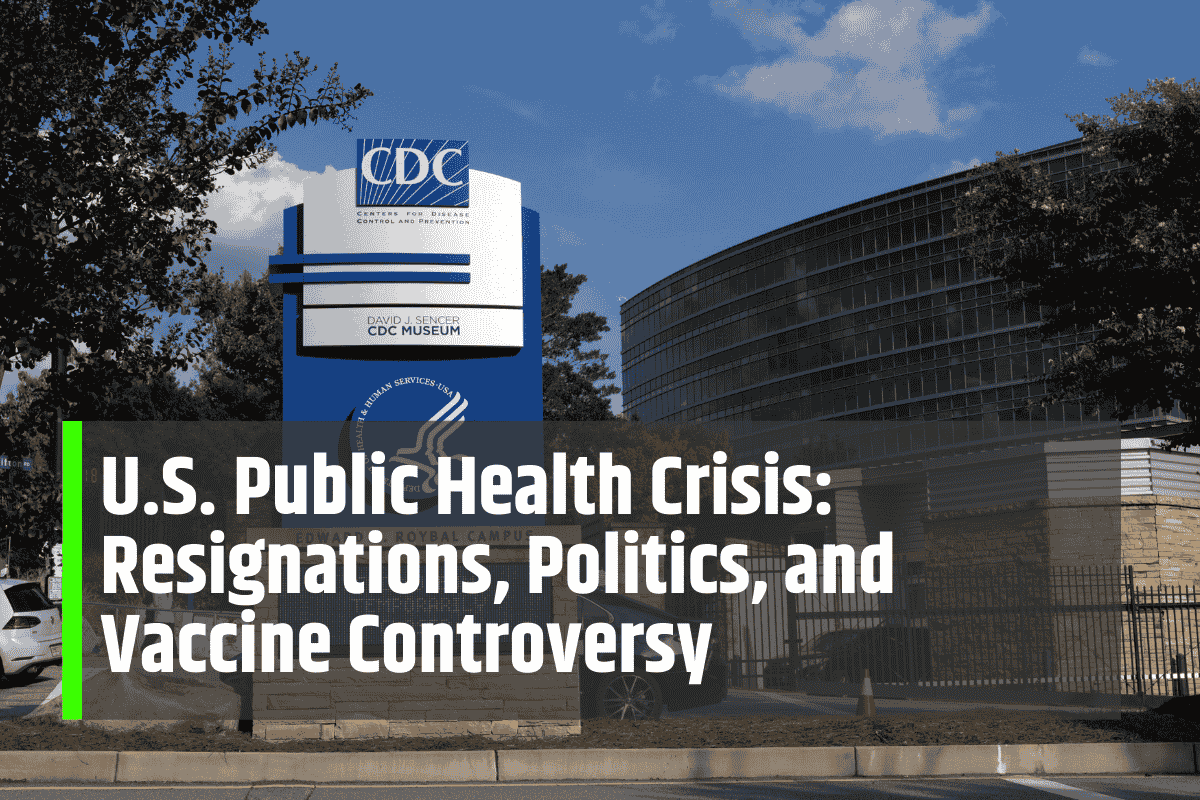
Recent resignations from senior experts at the Centers for Disease Control and Prevention (CDC) highlight growing concerns about the increasing politicization of the agency.
These experts warn of a dangerous breakdown in the “firewall” separating science from political influence, which they believe undermines the integrity of American public health policy.
Monarez’s Ouster and the Growing Crisis
The crisis escalated dramatically this week with the firing of CDC Director Susan Monarez by President Donald Trump after she had held the position for less than a month.
Monarez’s departure came after significant clashes with Robert F. Kennedy Jr., the Health Secretary, over vaccine policies.
Kennedy, known for his skepticism about vaccines, particularly those for Covid-19, was involved in policy decisions that raised alarms among many public health experts.
The Breakdown of the “Firewall”
The mass resignations, which included Demetre Daskalakis as the director of the CDC’s National Center for Immunization and Respiratory Diseases, pointed to the severe risks of politicizing public health decisions.
Daskalakis expressed his deep concerns on national television, warning that the CDC’s independence had been compromised. “The firewall between science and ideology has completely broken down,” he stated, criticizing the shift in direction under the Trump administration.
The Impact of Vaccine Skepticism
A significant concern raised by Daskalakis and other resigning officials was the growing influence of vaccine skeptics within the CDC.
Since Kennedy’s appointment, the Advisory Committee on Immunization Practices (ACIP), a critical body in vaccine policy, was overhauled with members known for their anti-vaccine stance.
Daskalakis warned that this shift would undermine vaccination programs and public trust in vaccine safety—a critical issue in the fight against infectious diseases.
Lack of Trust in the CDC
Dr. Debra Houry, a former chief medical officer at the CDC, expressed her disillusionment with the agency’s new direction. She pointed out that no CDC scientist had briefed Kennedy since his appointment, raising serious concerns about the politicization of science.
Houry expressed doubts about the agency’s ability to maintain scientific rigor and credibility moving forward.
Concern Over ACIP’s September Meeting
As the ACIP prepares for a pivotal meeting in mid-September, Houry warned that the committee would be filled with individuals who have openly expressed anti-vaccine views.
This shift, prompted by Kennedy’s dismissal of original members in favor of his own nominees, has sparked widespread concern, including from lawmakers in both parties.
Bipartisan Concerns and Calls for Action
Senator Bill Cassidy, a Republican and chair of the Senate Health Committee, has raised alarms about the lack of scientific process within the CDC under its current leadership.
He has called for an indefinite postponement of the ACIP meeting to prevent further damage to the scientific integrity of the organization. The political turmoil surrounding the CDC has drawn bipartisan criticism, highlighting the urgency of restoring trust in public health agencies.
The Threat to Public Health and Safety
Former CDC directors, including Tom Frieden and Richard Besser, have expressed grave concerns about the long-term effects of the current administration’s actions on public health.
Frieden warned that public health protections are “under assault,” while Besser feared that the country would be at “incredible risk” when the next public health crisis arises.
The removal of top officials and the politicization of health policy could leave the country ill-prepared for future pandemics or health emergencies.
Calls for Kennedy’s Resignation
The growing controversy has drawn sharp criticism from Senator Bernie Sanders, who, in an opinion piece for The New York Times, called for Robert F. Kennedy Jr.’s resignation.
Sanders argued that Kennedy’s longstanding opposition to vaccines disqualifies him from running the Department of Health and Human Services.
He warned that Kennedy’s actions are endangering public health and that his resignation is necessary for the future well-being of the American people.
The situation at the CDC highlights a growing crisis in U.S. public health, with political influence threatening to undermine the agency’s core mission of promoting public health and safety.
As experts resign in protest and critics call for change, the need for a scientific, evidence-based approach to health policy has never been more urgent. The future of American public health hinges on the restoration of trust, integrity, and independence within key health agencies like the CDC.