In 2013, Penny Blue of Union Hall, Virginia suffered a brain aneurysm. A nearby rural hospital stabilized her before she was flown to Roanoke Memorial, where she spent nearly two weeks in intensive care. She credits that hospital’s proximity for saving her life.
If it happened today, she fears the outcome would be different.
With closures looming, her nearest emergency facility could be an hour away. “Minutes and seconds make the difference between life and death,” Blue said.
Rural Hospitals on the Brink
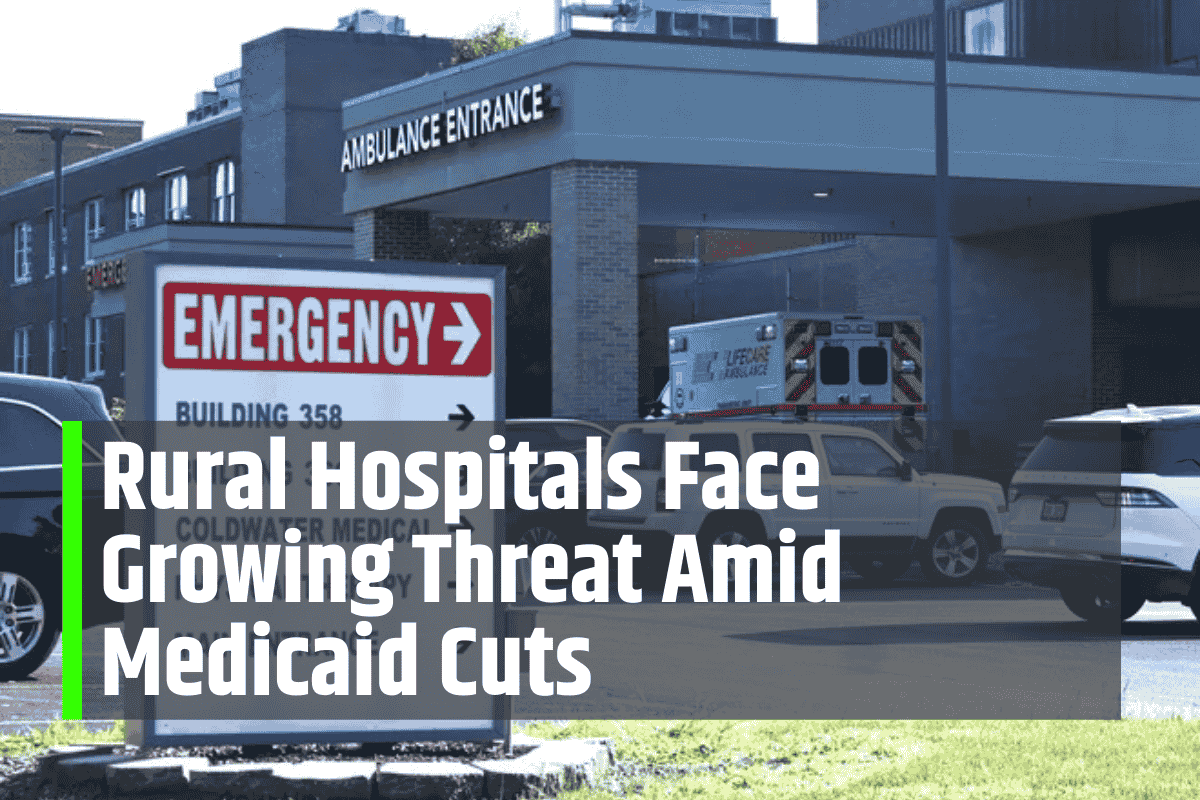
Rural hospitals were financially strained even before President Donald Trump signed the GOP tax and spending bill into law on July 4.
Now, experts warn, federal Medicaid cuts could accelerate closures. Analysts estimate 700 rural hospitals—nearly one in three nationwide—are at risk in the coming years.
The Medicaid Factor
Medicaid is a lifeline for rural communities, where enrollment is higher than in urban areas. Cuts will force states to either plug funding gaps or allow closures.
Advocacy group Protect Our Care projects more than $155 billion in Medicaid cuts over the next decade, with the biggest impacts in Republican-held districts.
Closures Already Beginning
Although the largest cuts take effect in 2026, hospitals are already adjusting budgets. In Nebraska, Community Hospital announced it would close a rural clinic just one day before Trump signed the bill.
Providence Health in Washington recently cut rehabilitation programs, citing rising costs and looming federal reductions.
The Affordability Crisis
Rural hospitals operate on slim margins, making them especially vulnerable to increased costs and lost reimbursements. The end of enhanced Affordable Care Act premium tax credits will also drive up insurance rates.
As premiums rise, some patients may forgo coverage, leaving hospitals with higher levels of uncompensated care.
Federal Reassurances and Funding
Congress included $50 billion for a new rural health transformation program, with $10 billion per year available for states that apply. Republicans argue this fund will protect rural care. “Rural hospitals are going to be fine,” said Senate Majority Leader John Thune.
But providers and advocacy groups say the money falls far short of offsetting $800 million per year in expected state Medicaid losses.
State-Level Struggles
States are scrambling to respond. Colorado created a $25 million stabilization fund for providers, but state Sen. Dylan Roberts acknowledged it cannot fill the gap. Michigan faces an estimated $5.6 billion shortfall over the next decade.
“There really isn’t much states can do to mitigate harm,” said Sen. Sarah Anthony, chair of Michigan’s Senate Appropriations Committee.
Community Consequences
The stakes extend beyond hospitals. Rural clinics, nursing homes, and specialty practices also face closure. Medicaid funds more than 60% of long-term care in nursing facilities.
Retired nurse Denise Parashac of Pennsylvania warned that when nursing homes close, families often shoulder impossible care burdens. “There’s really a snowball effect,” she said, pointing to overcrowded hospitals, delayed treatments, and worsening staff shortages.
Human Toll
For patients like Blue, the debate is not abstract. Cuts could mean the difference between life and death. “Don’t tell someone with an aneurysm not to panic when every second counts,” she said.
Roberts echoed that fear in his Colorado district, where women already drive an hour to give birth after the closure of local maternity services. “People don’t stay if there isn’t a hospital,” he warned.
Rural hospitals serve as anchors of their communities, providing emergency care, jobs, and stability. As federal cuts converge with rising costs, their survival is at risk.
Advocates argue that without stronger protections, entire regions could lose essential care—leaving patients like Penny Blue without the safety net that once saved their lives.