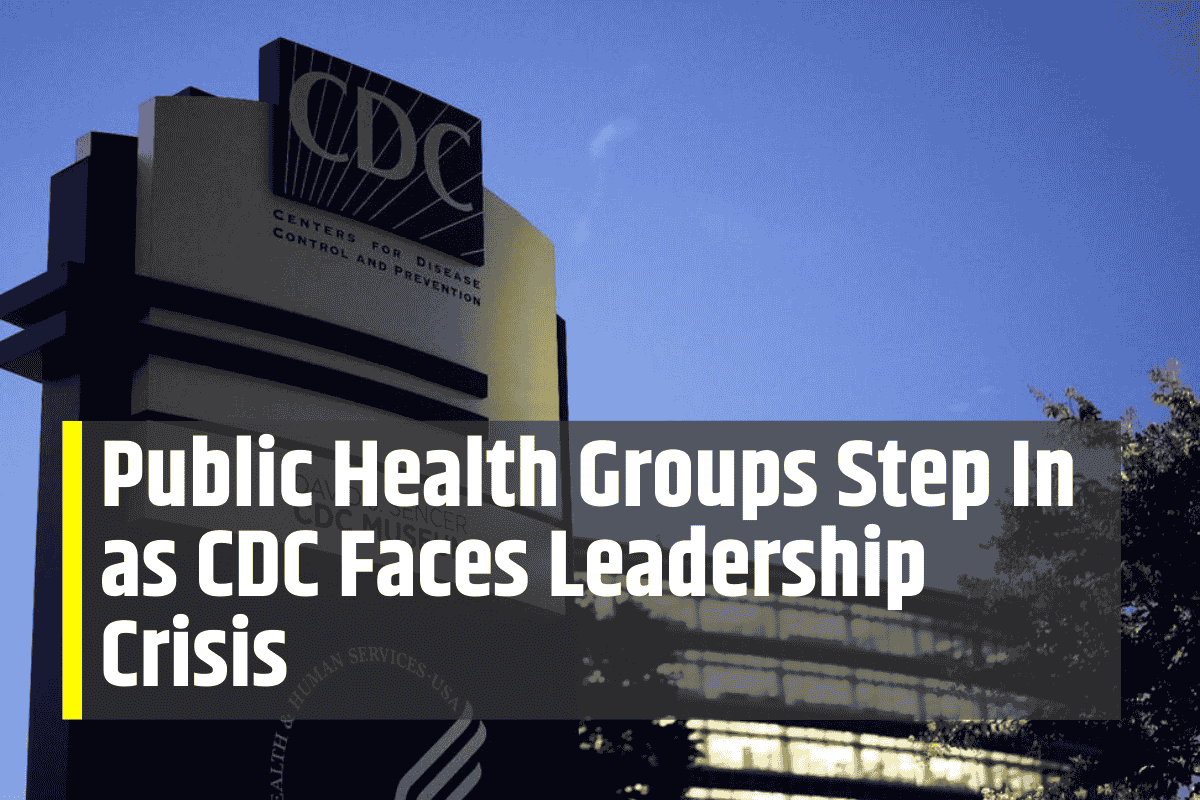
The Centers for Disease Control and Prevention (CDC) is experiencing deep upheaval. Leadership turnover, budget reductions, staff cuts, and political interference have disrupted the agency’s ability to perform its public health mission.
The turmoil escalated with the removal of Director Susan Monarez and the resignation of several senior officials.
Growing Concerns Over Political Influence
Health Secretary Robert F. Kennedy Jr. has initiated sweeping changes at the CDC, described by some as both extensive and potentially unlawful.
His restructuring includes downsizing critical programs and reshaping vaccine policy, creating widespread alarm among public health leaders who fear long-term damage to the nation’s health infrastructure.
Outside Groups Begin Filling the Gaps
In response, independent organizations have begun taking on roles traditionally led by the CDC. Their efforts include safeguarding long-standing vaccination recommendations, publishing health information the agency no longer provides, and preserving critical data collections.
These initiatives, though well-intentioned, lack the federal funding and authority that underpin national public health systems.
Limitations of Patchwork Solutions
Experts caution that while outside groups may temporarily fill gaps, their reach and resources are limited. Without federal mechanisms and broad platforms, these initiatives risk leaving Americans without consistent, evidence-based health guidance. Dr. Megan Ranney of Yale noted it is “not fair or appropriate” for citizens to rely on private groups.
The CDC’s Historical Role in Vaccination
For decades, the CDC has set national vaccine standards, offering guidance that doctors, schools, and insurers routinely adopt. These recommendations, developed through rigorous data review and expert consultation, have been central to U.S. public health.
The Advisory Committee on Immunization Practices (ACIP) historically ensured that recommendations were grounded in medical evidence.
Kennedy’s Intervention in Vaccine Policy
In May, Kennedy unilaterally announced that COVID-19 vaccines would no longer be recommended for healthy children and pregnant women, bypassing ACIP’s review. The following month, he dismissed the entire panel, claiming undue ties to manufacturers.
He replaced members with vaccine skeptics and excluded longstanding professional organizations from the decision-making process.
Medical Community Pushes Back
Many medical groups questioned Kennedy’s decision-making process, arguing it ignored robust scientific evidence. Organizations such as the American College of Obstetricians and Gynecologists continue to recommend COVID-19 vaccination for pregnant women.
Similarly, the American Academy of Pediatrics maintains guidance for young children, directly countering Kennedy’s directives.
Formation of the Vaccine Integrity Project
In response to these changes, researchers established the Vaccine Integrity Project at the University of Minnesota.
Its mission is to gather and disseminate evidence about vaccine safety and effectiveness, filling the void left by the CDC and ACIP. The group seeks to ensure the medical community still has access to credible analysis.
Independent Expert Meetings
In August, the project hosted a virtual meeting resembling ACIP’s traditional sessions. Experts presented reviews of recent studies on vaccines for COVID-19, flu, and RSV, focusing on children, pregnant women, and immunocompromised individuals.
A panel including leading medical professionals asked probing questions, mimicking the rigorous review once conducted under federal oversight.
Data Gaps and Transparency Challenges
Despite their efforts, independent researchers lack access to unpublished surveillance and safety data historically compiled by the CDC. Presentations must therefore rely solely on publicly available studies, leaving gaps in the evidence base.
This limitation underscores the challenge of replicating the CDC’s scope and authority outside the federal framework.
Looking Ahead
As the CDC undergoes major restructuring, external organizations are stepping in to maintain continuity of public health guidance.
While these efforts highlight the resilience of the medical community, experts warn that fragmented systems cannot replace a unified federal authority. The future of vaccine policy and health data remains uncertain.