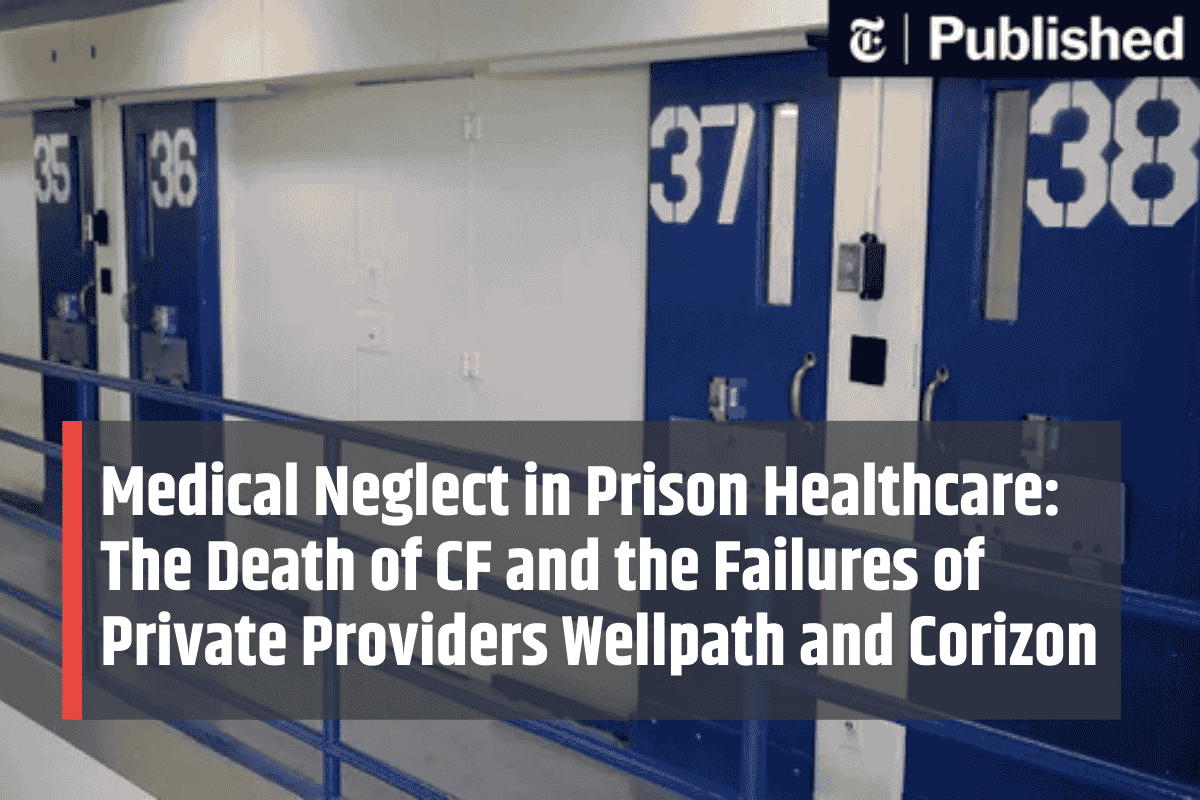
In March, a 57-year-old inmate at a Santa Barbara County jail, referred to as CF in a grand jury report, died after being denied proper medical care. CF complained of severe abdominal pain, but instead of being sent to the emergency room, jail staff mistakenly attributed her condition to opioid withdrawal.
This decision led to her death from a perforated stomach, which could have been prevented with timely treatment.
Poor Response and Delayed Care
CF’s condition worsened as she continued to suffer, with her cell floor covered in vomit and requests for hospital care ignored. Despite her critical condition, medical staff failed to document the reasons for denying her treatment.
A grand jury investigation found that if CF had received immediate care, she had a 90% chance of survival. Instead, staff administered Narcan, which is ineffective for her condition, leading to her death.
Wellpath’s Role and Negligence
Wellpath, the private healthcare provider responsible for Santa Barbara County’s jail healthcare services, was implicated in CF’s death.
The company has faced repeated allegations of severe negligence over the years, leading to multiple investigations into its operations. Despite these findings, Wellpath continues to operate in the prison healthcare system, which has become a $9.3 billion industry.
Staffing Shortages and Chronic Negligence
Investigations into Wellpath-managed facilities, including a 2023-24 Santa Barbara County grand jury probe, revealed chronic staffing shortages. These shortages contributed to delays in care and exacerbated the risks for inmates.
In CF’s case, staff failure to respond appropriately resulted in her tragic death, a pattern seen in other investigations into Wellpath and its predecessor, Corizon.
The Growth of the Private Prison Healthcare Industry
Despite ongoing scrutiny and multiple lawsuits, the private equity-backed prison healthcare industry, led by companies like Wellpath and Corizon, has continued to expand.
These companies have been accused of cutting costs to maximize profits, often at the expense of quality care for inmates. The industry’s growth, fueled by private equity firms, raises concerns about accountability, particularly when prisoners are the most vulnerable.
The History of Corizon and Wellpath’s Failures
Corizon, which merged with other prison healthcare companies in 2011, faced over 660 malpractice suits by 2016. The company was particularly criticized for its poor handling of medical care at New York’s Rikers Island, where it violated inmates’ constitutional rights.
Corizon’s failure to provide adequate care for mentally ill inmates and those experiencing physical harm from prison staff led to a federal investigation and its eventual loss of the Rikers Island contract in 2015.
Wellpath emerged from a 2018 merger of multiple companies, including Corizon, and quickly became a dominant player in the market. However, it too has faced accusations of constitutional violations, particularly regarding the inadequate monitoring of mentally ill inmates and failing to provide timely care.
Private Equity’s Influence and Accountability Challenges
Experts argue that private equity firms’ deep pockets and political power allow companies like Wellpath and Corizon to evade accountability despite their widespread failures.
Private equity’s strategy of cutting costs while maintaining contracts with prisons and jails has been linked to the deterioration of healthcare quality in these facilities.
Moreover, the legal and political landscape surrounding prison healthcare makes it difficult to hold companies accountable. The 1996 Prison Litigation Reform Act and Supreme Court rulings have created barriers for incarcerated individuals seeking justice, making it even harder to address violations of their rights.
Inaction and Lack of Justice for CF
Despite the grand jury’s investigation into CF’s death, there has been little accountability for Wellpath. The county has only promised a review of its services, and there are no immediate plans to hold the company responsible for CF’s death.
Even if Wellpath loses its contract, there are few alternative providers to choose from, leaving inmates at continued risk.
The Broader Implications for Prison Healthcare
The case of CF highlights the systemic issues within the privatized prison healthcare system, where cost-cutting measures and insufficient staffing have led to numerous preventable deaths and suffering.
With companies like Wellpath and Corizon continuing to operate despite years of negligence, the need for reform in prison healthcare has never been more urgent.