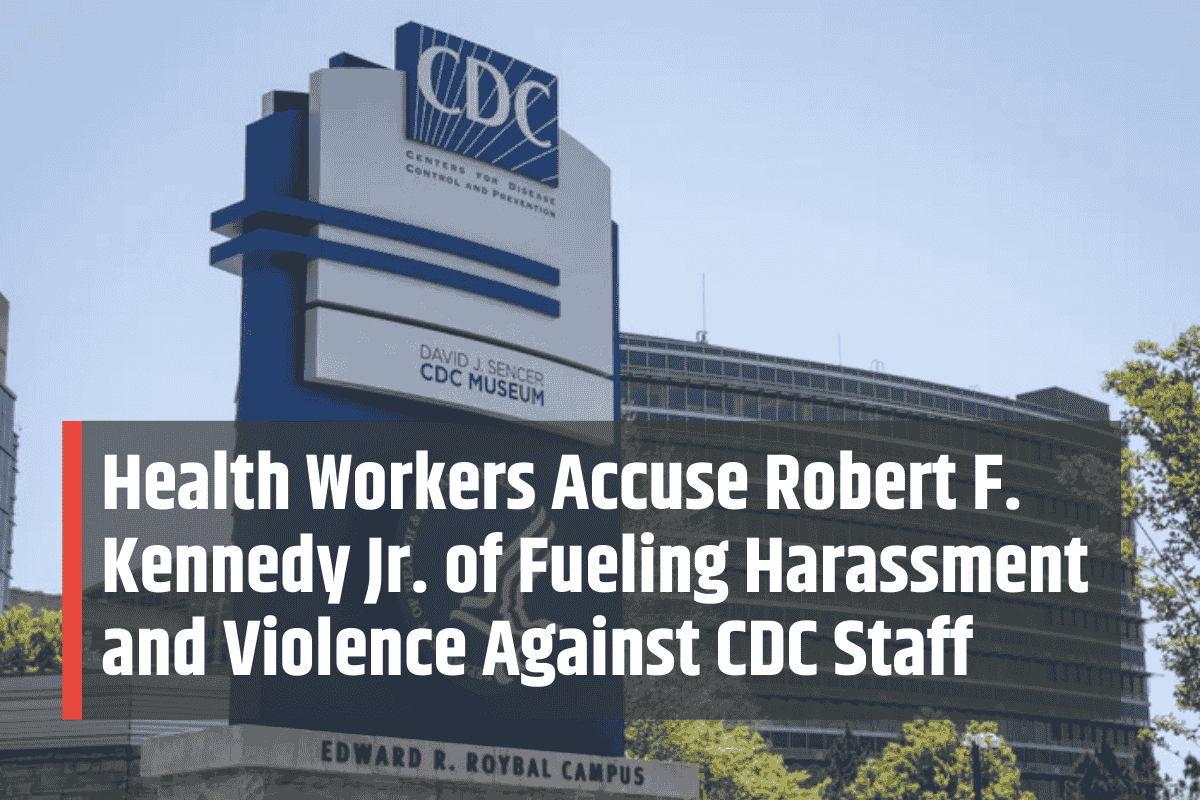
More than 750 current and former federal health employees have accused Robert F. Kennedy Jr., the Secretary of Health and Human Services (HHS), of fueling harassment and violence against healthcare workers.
They specifically criticize his rhetoric for contributing to the harassment of Centers for Disease Control and Prevention (CDC) staff.
The Role of Kennedy’s Actions in Public Health Mistrust
In a letter sent to Kennedy and Congress, the health workers pointed to specific actions by Kennedy that they believe sowed public mistrust.
These include his questioning of vaccine safety, firing key CDC staff, and removing members from the CDC vaccine advisory panel. These actions, they argue, have harmed the credibility of federal health institutions.
Connection to CDC Shooting Incident
The health workers linked Kennedy’s statements to the tragic August 8 shooting at the CDC’s Atlanta headquarters. A gunman opened fire on CDC buildings, killing a police officer.
Law enforcement officials indicated that the shooter, who blamed the COVID-19 vaccine for his depression, was influenced by the misinformation surrounding vaccines that Kennedy has promoted.
Kennedy’s Response to the Shooting Incident
After the attack, Kennedy did not publicly acknowledge the shooter’s motives, despite law enforcement’s clear connection between the shooter’s anti-vaccine stance and the CDC.
While Kennedy condemned political violence, he did not comment on how his words may have influenced the shooter’s actions.
Call for Action to Address Vaccine Misinformation
The letter from federal health workers demands that Kennedy cease spreading misleading information about vaccines and public health.
The workers urged Kennedy to publicly disavow claims about vaccine safety and transmission, which they say undermine public trust and the work of medical professionals.
Allegations of Complicity in Dismantling Public Health
The letter further accuses Kennedy of being complicit in dismantling America’s public health infrastructure.
The workers claim that his rhetoric has endangered the health of the nation, particularly as it relates to the CDC’s work. They are calling for immediate action to address the dissemination of false health information.
Ensuring Safety and Supporting the CDC Workforce
The workers also requested that HHS acknowledge the CDC’s scientific approach and ensure that its staff can work without the threat of violence.
They called for the department to provide an environment where federal employees can carry out their duties without fear of harm, citing the violent attack at the CDC as a direct consequence of Kennedy’s rhetoric.
Efforts to Combat Targeted Online Harassment
The workers are asking Kennedy to take “vigorous action” against online harassment, including the removal of “DEI watchlists” that target federal employees.
They are demanding a response from Kennedy by September 2, calling for concrete steps to protect healthcare workers from online and offline threats.
HHS Defends Kennedy’s Actions
In response to the growing criticism, the HHS issued a statement affirming Kennedy’s support for CDC employees. The department emphasized that Kennedy is committed to their safety and well-being. Kennedy also visited Atlanta to show his support for the CDC staff in the aftermath of the shooting.
Political Stance on Public Health Reforms
The HHS statement also defended Kennedy’s policies, framing them as part of a broader effort to reform public health in America. It criticized attempts to politicize the tragedy, asserting that the violence should not be used to undermine the administration’s health reforms.
Diverging Views on Pediatric Vaccination
The letter comes just a day after the American Academy of Pediatrics (AAP) publicly diverged from the Trump administration’s health agencies on pediatric COVID-19 vaccination guidelines.
The AAP recommended that children as young as six months receive the vaccine, while the current federal guidance remains different. Kennedy responded to the AAP’s position, accusing the organization of failing to disclose conflicts of interest.