Infertility has become a growing concern in the United States, affecting both males and females. Despite the increasing rates of infertility, disparities persist in research funding and public health interest.
This study compares research expenditures and public interest regarding male and female infertility, seeking to identify existing inequalities.
Research Methodology
This study utilized data from two main sources: National Institutes of Health (NIH) RePORTER and Google Trends. The NIH RePORTER database provided funding information between 1985 and 2022, while Google Trends offered insights into public interest from 2004 to 2023.
The study analyzed NIH grants related to male and female infertility and evaluated the relative search volumes (RSV) for related terms on Google.
Results: Research Funding and Public Interest
NIH RePORTER Data
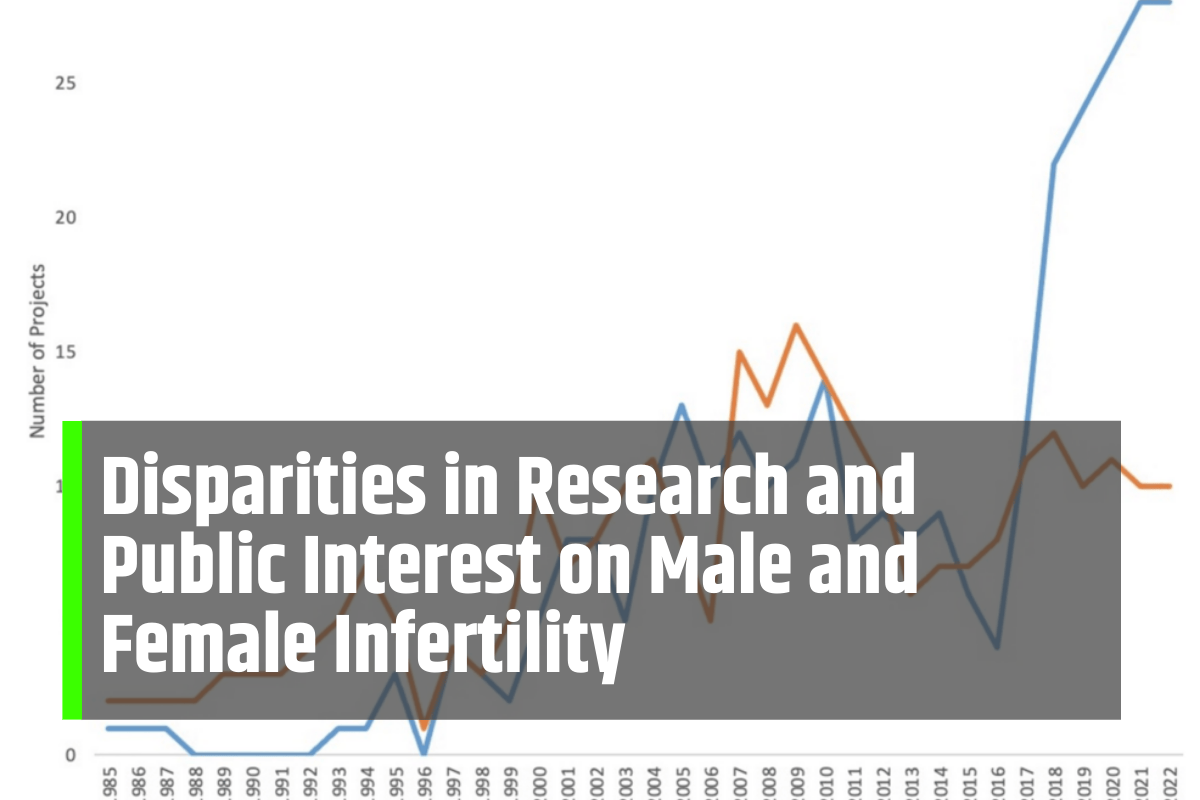
The NIH awarded a total of 589 grants between 1985 and 2022, with female infertility receiving more overall funding than male infertility. Female infertility projects received $100,931,789, compared to $71,684,515 for male infertility.
Additionally, female infertility had higher funding per grant ($315,192 vs. $286,371; p < 0.0001). Despite these differences in funding, both categories showed a similar number of grants awarded each year.
The data further revealed that male infertility grants resulted in more peer-reviewed publications per award (14 vs. 9; p < 0.0001), despite receiving less total funding.
In terms of the types of research, male infertility received more basic science awards, while female infertility received more translational science awards. However, both categories showed a similar number of NIH clinical studies and news/media coverage per grant.
Google Trends Data
In terms of public interest, the analysis of search volumes revealed a significant disparity between male and female infertility. The search term “male infertility” consistently had higher relative search volume (RSV) compared to “female infertility”.
Specifically, when analyzed separately, the median RSV for male infertility was 36, compared to 34 for female infertility (p < 0.0001). When searched simultaneously, male infertility maintained a significantly higher RSV (median: 35) compared to female infertility (median: 14.5) (p < 0.0001).
Interestingly, public interest in male infertility decreased over time, with an RSV decline of 38 points (p < 0.0001). In contrast, female infertility saw a much smaller decrease in interest, with a 15-point drop (p = 0.9). This suggests a decrease in public awareness about male infertility, which could lead to delayed diagnosis and treatment.
Discussion
The study reveals significant disparities in research support and public interest between male and female infertility. While female infertility receives more funding and higher levels of research attention, male infertility generates more public interest in terms of search volume.
Despite receiving more funding, female infertility is more likely to receive translational science grants, while male infertility is associated with more basic science grants.
The findings underscore the need for a more equitable distribution of research funding and resources. Female infertility’s higher research funding may be influenced by the historical bias toward women’s reproductive health and the greater healthcare engagement of women in fertility-related issues.
However, the scarcity of research on male infertility may stem from a lack of specialized healthcare providers (e.g., andrologists) and lower public awareness.
Furthermore, the decline in public interest in male infertility could result from cultural biases that view infertility as a predominantly female issue. This could hinder efforts to increase awareness and early diagnosis in men, as lower public interest often correlates with delayed treatment.
Implications and Future Research
This study’s results indicate a need for a shift in health research policy to ensure equitable funding for both male and female infertility. Additionally, public health campaigns should address the disparity in public interest, particularly by raising awareness about male infertility.
Future research should explore the causes of these disparities, including cultural, economic, and healthcare-related factors, through qualitative methods such as focus groups with researchers, healthcare professionals, and patients.
Understanding these factors is essential for developing strategies that ensure equal attention and resources for both male and female infertility in both research and public health initiatives.