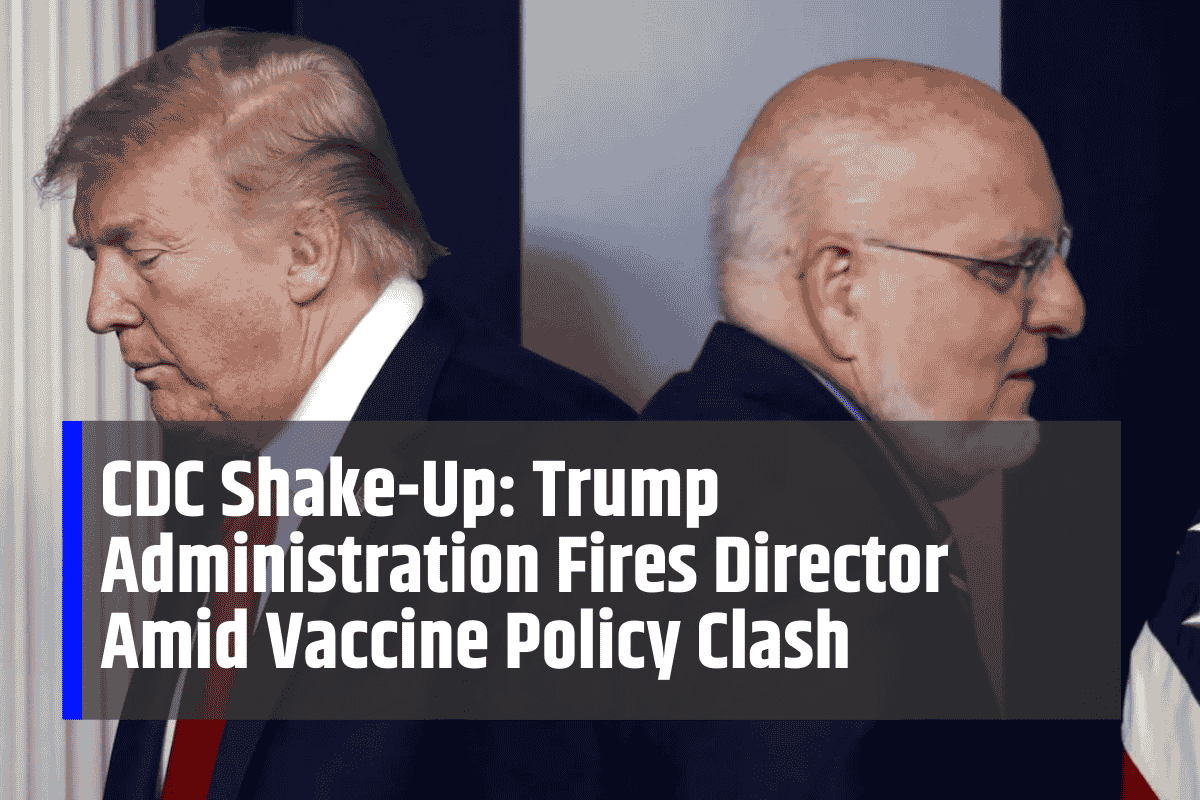
The Trump administration confirmed on Wednesday that Susan Monarez, the recently appointed director of the Centers for Disease Control and Prevention (CDC), had been dismissed.
The decision followed a tense standoff between Monarez and Health Secretary Robert F. Kennedy Jr., who has spearheaded controversial changes to national vaccine policy.
Monarez’s Brief Tenure
Monarez, a seasoned health scientist and career civil servant, had been in her role for less than a month. Despite her short tenure, she faced mounting pressure from the Department of Health and Human Services (HHS) to align with Kennedy’s agenda. Ultimately, her refusal to comply made her a target for removal.
Dispute Over Vaccine Policy
The conflict centered on Kennedy’s sweeping overhaul of federal vaccination strategy. Critics say his approach undermines scientific consensus and reduces access to proven immunizations.
Monarez reportedly resisted directives she considered unscientific and reckless, particularly those that required dismissing experienced health experts and supporting controversial policy shifts.
Lawyers Defend Monarez’s Integrity
Following news of her removal, Monarez’s attorneys issued a strongly worded statement. They said she neither resigned nor received direct notification from the White House before being dismissed.
Her refusal to step down, they argued, reflected her commitment to integrity, evidence-based decision-making, and the protection of millions of American lives.
White House Statement on Termination
Hours later, the White House confirmed Monarez’s firing. Spokesman Kush Desai framed the decision as necessary to align the CDC with President Trump’s health agenda, dubbed Making America Healthy Again.
Desai argued that Monarez’s refusal to support new policies left the administration no choice but to terminate her leadership.
Kennedy’s Role in the Dispute
The Washington Post reported that Kennedy had directly pressured Monarez to resign. She resisted, refusing to pledge loyalty to his vaccination reforms.
Kennedy, a longtime vaccine skeptic, has been criticized for placing ideology over science in his role as health secretary, a position with sweeping influence over national health policy.
Wave of Resignations at the CDC
The fallout extended beyond Monarez’s dismissal. Five senior CDC officials submitted resignations in the days following the announcement, according to the American Federation of Government Employees (AFGE) Local 2883.
The union, which represents over 2,000 CDC workers, described the resignations as a devastating blow to the agency’s leadership.
Union Response to Departures
In a statement, the AFGE said many officials felt forced to leave because political interference left them unable to perform their duties effectively.
The union underscored that vaccines remain a cornerstone of public health, warning that the erosion of scientific independence at the CDC could have serious consequences for the American people.
Voices from Within the Agency
Among those resigning was Demetre Daskalakis, director of the CDC’s National Center for Immunization and Respiratory Diseases.
Daskalakis, known for his leadership during infectious disease crises, expressed frustration with the growing politicization of public health. “Enough is enough,” he declared, reflecting broader discontent among career scientists.
Growing Concerns About Politicization
Observers say the episode highlights a troubling pattern of political influence over scientific institutions. The forced departure of respected leaders raises concerns about the CDC’s ability to maintain credibility and independence.
Critics argue that undermining expertise threatens not only vaccine policy but also the nation’s broader capacity to respond to health crises.
A Pivotal Moment for Public Health
The clash between Monarez and Kennedy represents more than a personal dispute. It underscores deep divisions in how the United States approaches vaccines and public health.
With multiple senior officials gone, the CDC faces a leadership vacuum at a critical time, fueling uncertainty about its future role and direction.