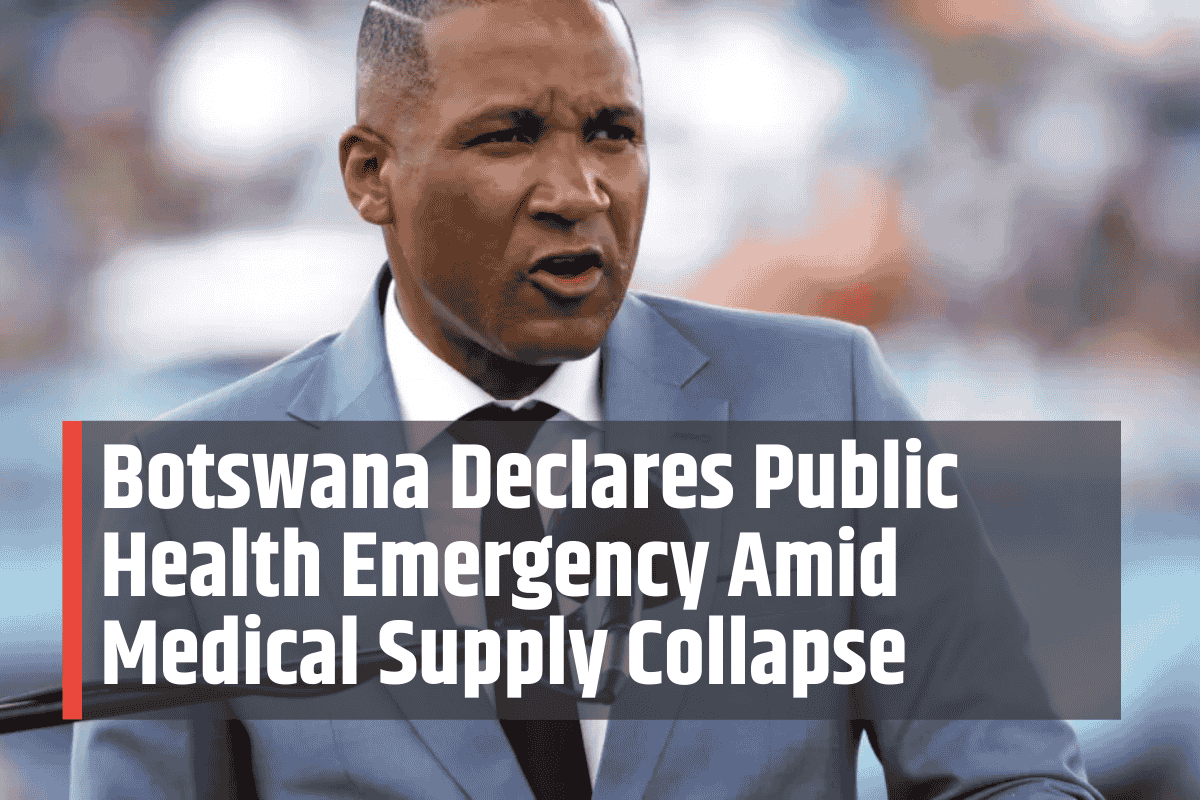
Botswana has entered a public health emergency following the collapse of its medical supply chain. President Duma Boko announced the crisis after the Ministry of Health and Wellness reported severe shortages in essential medicines and supplies, warning of widespread disruptions across hospitals and clinics nationwide.
Mounting Debts and Supply Shortages
Earlier this month, the Ministry revealed it owed private health facilities and suppliers about $75 million.
This debt crippled procurement processes, leading to shortages of medications for hypertension, cancer, diabetes, tuberculosis, asthma, and mental health conditions. Elective surgeries have been suspended due to the lack of critical resources.
Shortage of Essential Medical Tools
Beyond medicines, the Ministry also reported shortages of basic but vital medical items such as dressings and sutures. These deficits hinder routine medical procedures, leaving healthcare workers unable to deliver timely treatment. The crisis underscores the fragility of the national supply system under current economic pressures.
Presidential Address on Systemic Failure
In a televised address, President Boko declared: “The medical supply chain, as run by central medical stores, has failed.” He highlighted how this collapse has led to severe nationwide disruption.
The government, he noted, must now resort to emergency measures to ensure medicines reach citizens in need.
Emergency Funding and Military Oversight
To contain the crisis, the Ministry of Finance approved emergency funding of 250 million pula ($18.7 million). President Boko confirmed the military will oversee the rapid distribution of medical supplies.
The first consignments were dispatched from the capital, Gaborone, with priority given to deprived rural communities facing acute shortages.
Rising Medicine Costs Exacerbate Challenges
Boko also addressed inflated medicine prices, which have risen to five to ten times higher than normal. He warned that under current economic conditions, such prices are unsustainable.
The combination of scarcity and cost escalation makes equitable access to healthcare increasingly difficult for vulnerable populations.
Economic Roots of the Crisis
The medical emergency is closely tied to Botswana’s shrinking national budget, largely a consequence of the downturn in the global diamond market.
Diamonds, which account for 80 percent of the country’s foreign earnings, have long supported government spending. Declining sales have now eroded state revenues significantly.
Government Spending Cuts
As revenues tightened, the government suspended certain ministerial purchases last month, further weakening public service delivery. With 2.5 million citizens depending on government-backed systems, the suspension of procurement has rippled across sectors.
Healthcare, one of the most resource-dependent services, has suffered the most immediate and visible impacts.
Impact of Foreign Aid Reductions
Adding to domestic economic challenges are steep aid reductions from the United States under President Donald Trump. Previously, the U.S. funded a third of Botswana’s HIV response and contributed $12 million via The Global Fund to combat malaria and tuberculosis. The cuts have left substantial funding gaps.
Consequences for HIV and Public Health
Botswana has long been recognized for its robust HIV response. However, reduced international aid jeopardizes prevention and treatment programs.
With fewer resources available, the country risks backsliding in its fight against HIV, tuberculosis, and other infectious diseases, worsening the current health emergency.
Alarming Impact on Children
UNICEF raised concern over the worsening crisis, urging swift international and national action. The agency highlighted that one in five children is underweight in a western district near the Namibian border.
Shortages of medicine and nutrition interventions threaten to worsen child health outcomes, deepening the humanitarian dimensions of the emergency.
A Crossroads for Botswana’s Future
The unfolding crisis highlights the interconnectedness of global markets, international aid, and national health security. Botswana must balance economic reforms, diversify revenue sources, and secure reliable partnerships to prevent further deterioration.
The coming months will test the government’s capacity to restore stability and safeguard public health.