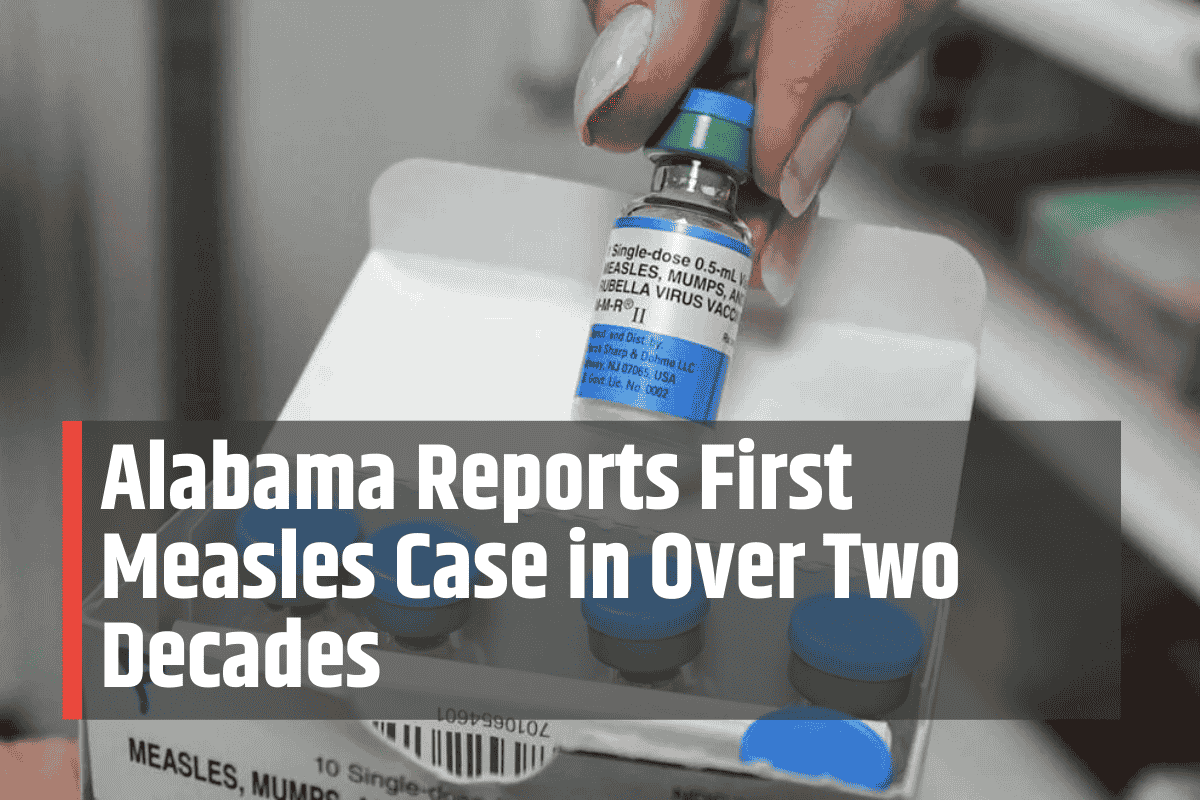
The Alabama Department of Public Health (ADPH) has confirmed the state’s first measles case since 2002. The patient is a child under the age of five who contracted the illness while traveling outside the United States. Officials noted the child was unvaccinated against measles.
Limited Exposure Risk
According to ADPH, the child does not attend daycare or school, reducing potential exposure to others. Entities involved in treatment and management have been notified. The child’s siblings are vaccinated against measles, and as of now, they have not shown any symptoms of the disease.
Importance of Vaccination
ADPH Chief Medical Officer Dr. Karen Landers emphasized vaccination as the best protection. Unvaccinated individuals exposed to measles face a 90 percent chance of infection. Because people can transmit measles several days before showing symptoms, vaccination remains essential to prevent outbreaks and protect vulnerable populations.
How Measles Spreads
Measles is a highly contagious viral respiratory illness. The virus lives in mucus within the nose and throat of infected individuals. It spreads easily through droplets expelled when an infected person sneezes or coughs. Others may become ill simply by breathing contaminated air or touching infected surfaces.
Onset of Symptoms
Symptoms typically appear seven to 14 days after exposure. Early signs include fever, cough, runny nose, and watery or red eyes. As the illness progresses, a rash develops. According to Dr. Landers, individuals can begin spreading the virus up to four days before these symptoms appear.
Risks for Vulnerable Groups
While measles can affect anyone, those with weakened immune systems may shed and transmit the virus for longer periods. Complications can include ear infections, pneumonia, or encephalitis, which can be life-threatening. Infants, cancer patients, and those taking immunosuppressive medication are at particularly high risk.
No Specific Antiviral Treatment
There are no antiviral medications available to directly treat measles. Care focuses on managing symptoms in ways similar to treating a cold or flu. Supportive treatment may include rest, fluids, and fever-reducing medications. Preventing infection through vaccination remains the most effective strategy.
Role of the MMR Vaccine
Protection against measles is part of the measles-mumps-rubella (MMR) vaccine, or its four-part version, the measles-mumps-rubella-varicella (MMRV) vaccine. The first dose is given between 12 and 15 months of age, followed by a second dose at 4 to 6 years.
Vaccination for High-Risk Situations
In some cases, infants as young as 6 months may receive the first MMR dose early, particularly if traveling internationally or during an outbreak. Completing both doses provides strong protection, making large-scale outbreaks far less likely in communities with high vaccination rates.
Effectiveness of the Vaccine
The MMR vaccine is highly effective, with an estimated 99 percent protection rate against measles after the second dose. Pediatricians’ offices and county health departments regularly provide the vaccine. Public health experts stress that receiving the vaccine is much safer than risking infection.
Guidance for Parents
Parents who suspect their child may have measles, or who know their child has been exposed, should contact a doctor immediately. Early medical advice is especially crucial for infants, children with tuberculosis, or those with conditions that compromise the immune system, such as cancer or autoimmune disease.
A Preventable Disease
Health officials continue to remind the public that measles is entirely preventable with timely vaccination. The confirmed case in Alabama underscores the importance of maintaining high vaccination coverage to prevent reemergence of a disease once nearly eliminated in the United States.