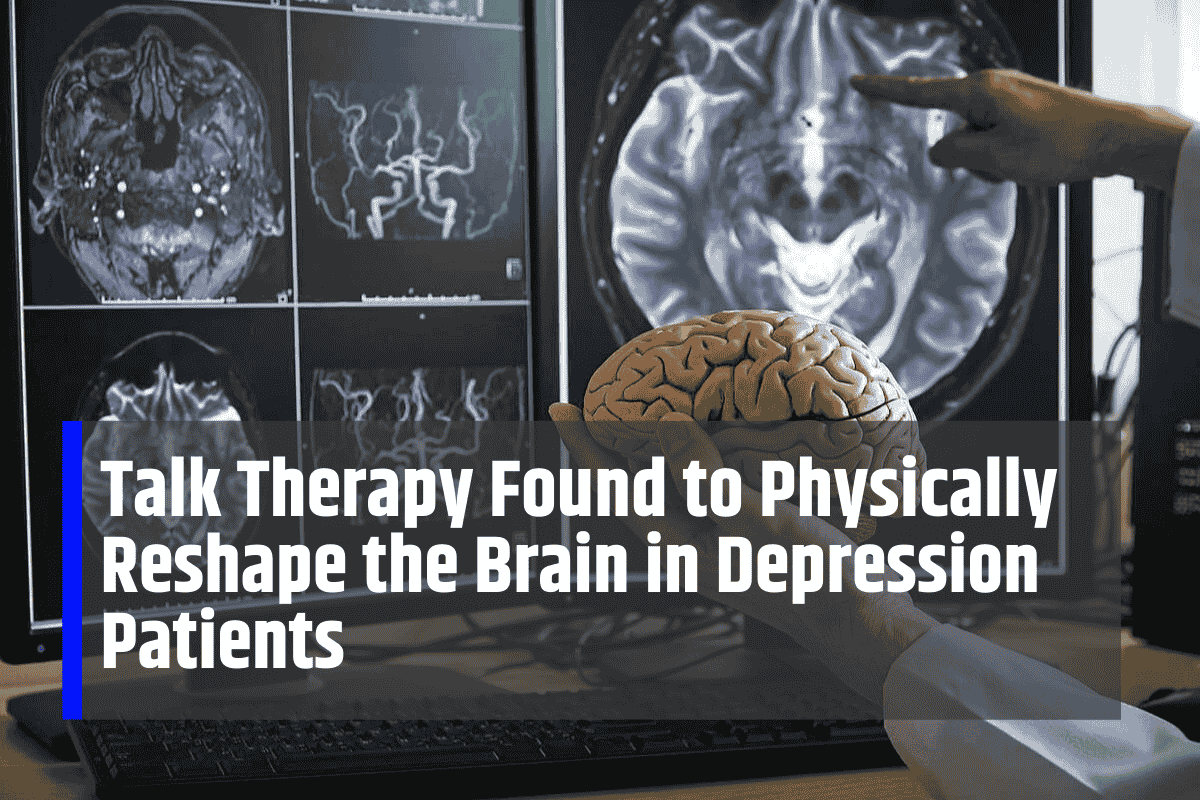
A groundbreaking study has shown that talk therapy can physically alter the structure of the human brain. Researchers found that patients with severe depression experienced measurable brain changes after undergoing psychotherapy, offering new scientific evidence for its effectiveness. The findings were published Aug. 26 in Translational Psychology.
Brain Growth in Emotion Centers
Magnetic resonance imaging (MRI) scans revealed growth in specific brain regions responsible for processing emotions. Patients showed increased grey matter in the left amygdala and the right anterior hippocampus, two areas long associated with emotional regulation and mood.
These changes were strikingly similar to those produced by psychiatric medications.
First Reliable Biomarker Identified
“This is the first time we have a reliable biomarker for the effects of psychotherapy on brain structure,” said senior researcher Ronny Redlich, head of biological and clinical psychology at Martin Luther University Halle-Wittenberg.
He summarized the findings in simple terms: “Psychotherapy changes the brain.”
Global Impact of Depression
Depression affects an estimated 280 million people worldwide. Past research has linked the disorder to structural changes in the brain, particularly reductions in hippocampal and amygdala size.
These alterations are believed to contribute to difficulties with emotional regulation, memory, and stress response. Psychotherapy may now offer a proven way to reverse such changes.
Study Design and Participants
The study enrolled 30 patients with severe depression, all of whom completed 20 sessions of cognitive-behavioral therapy (CBT).
CBT is a well-established treatment that helps individuals recognize and reshape negative thought patterns and behaviors. Researchers selected MRI imaging to measure physical brain changes before and after therapy.
Why Cognitive-Behavioral Therapy Matters
CBT remains one of the most widely used treatments for depression. According to researchers, the therapy not only reshapes thought processes and emotions but may also induce structural and functional brain changes.
While similar effects had been shown with medication or electrostimulation, this study is the first to confirm it for psychotherapy.
Remarkable Results for Patients
After treatment, 19 of the 30 participants showed minimal or no remaining symptoms of depression. The MRI scans confirmed structural growth in their brain tissue, correlating with their improved mental health.
Patients with the most significant amygdala growth also experienced the greatest relief from emotional difficulties.
Understanding the Findings
“These results demonstrate a clear connection between brain structure and symptom improvement,” said lead researcher Esther Zwiky, psychologist at Martin Luther University.
She emphasized that MRI scans provided a reliable way to track these structural changes, offering a new tool for measuring psychotherapy’s biological effects.
Therapy Versus Medication
Researchers cautioned against framing psychotherapy as superior to medication. Instead, the study suggests that both approaches affect the brain in similar ways. “Psychotherapy is an equally effective alternative from a medical and scientific standpoint,”
Redlich explained, noting that treatment choices should be tailored to individual patient needs.
Implications for Mental Health Treatment
The findings open new possibilities for integrating psychotherapy into treatment plans for severe depression. By showing measurable biological effects, therapy gains recognition not only as a psychological intervention but as a treatment with physical impact on the brain.
This may help reduce stigma and strengthen support for broader access to talk therapy.
Looking Ahead
The study highlights the importance of continuing research into psychotherapy’s neurological effects. Larger studies could further validate these findings and expand understanding of how non-drug treatments reshape the brain.
Ultimately, this research underscores the potential of therapy as a powerful tool in the fight against depression.