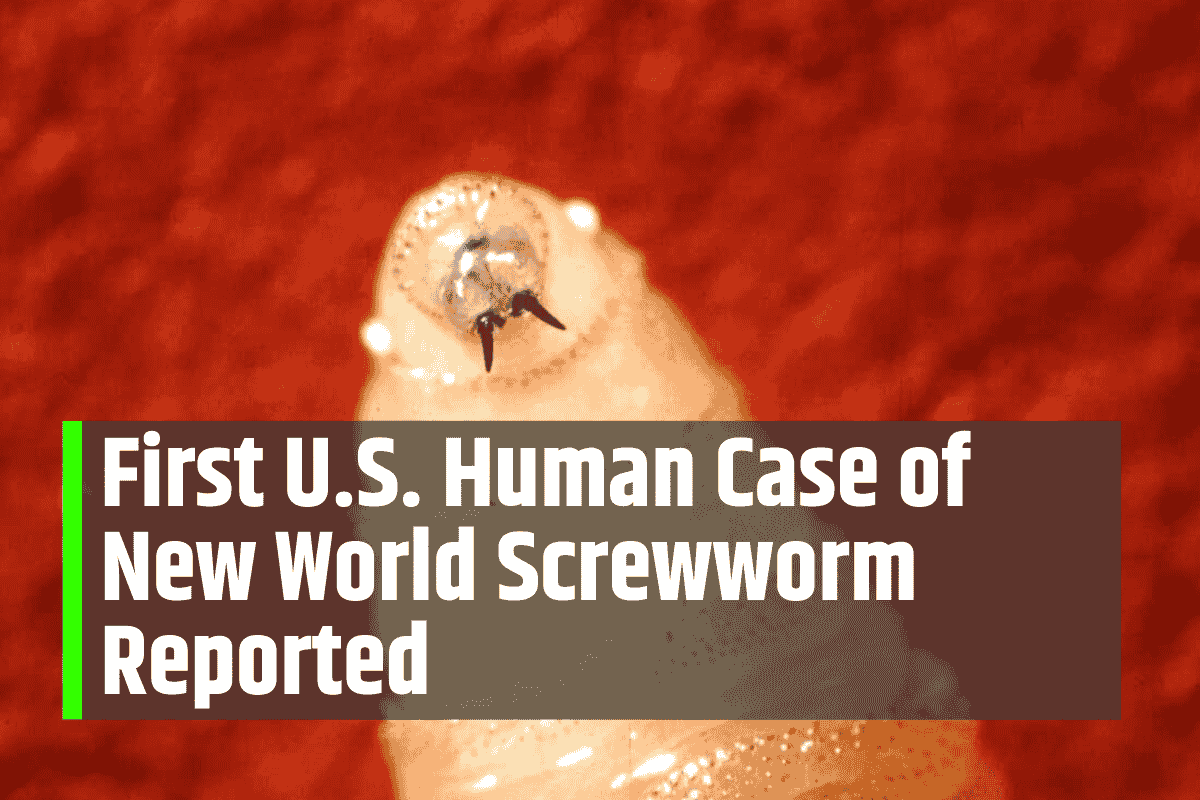
The U.S. Department of Health and Human Services (HHS) has confirmed the nation’s first human case of travel-associated New World screwworm.
The case, verified by the Centers for Disease Control and Prevention (CDC) on August 4, involved a patient who had recently returned from El Salvador, according to HHS spokesperson Andrew G. Nixon.
Conflicting Reports on Origin
Earlier reports from industry sources suggested the infected individual had traveled from Guatemala. HHS has not clarified the discrepancy.
Officials continue to stress that the risk to public health within the United States remains “very low.” No animal cases have been reported in 2025.
Industry Concerns
Conflicting accounts about the case have unsettled livestock producers already on high alert. Screwworm infestations, spreading northward from Central America and southern Mexico, pose serious risks to U.S. cattle herds.
The beef industry is particularly concerned about transparency and the potential economic fallout should the pest gain a foothold domestically.
USDA Response and Economic Risks
Just a week before confirmation of the case, U.S. Agriculture Secretary Brooke Rollins visited Texas to announce plans for a sterile fly facility aimed at combating screwworms.
The U.S. Department of Agriculture (USDA) has estimated that an outbreak in Texas, the nation’s largest cattle-producing state, could cost $1.8 billion through livestock losses, labor, and medication.
Communication Gaps
Some state veterinarians expressed frustration with federal communication. Beth Thompson, South Dakota’s state veterinarian, said her office learned about the Maryland case through informal networks before the CDC confirmed it.
She noted that federal officials deferred inquiries back to the state, raising concerns about information-sharing practices.
What Are Screwworms?
Screwworms are parasitic flies whose females lay eggs in wounds of warm-blooded animals. Once hatched, larvae burrow into living flesh, feeding aggressively and potentially killing the host if untreated. The feeding pattern, resembling a screw drilling into wood, gives the parasite its name.
Human and Animal Health Risks
Although rare in humans, screwworm infestations can be fatal without treatment. Removal involves extracting hundreds of larvae and disinfecting wounds.
With prompt care, infestations are survivable, but the threat to cattle and wildlife remains severe. An outbreak among livestock could devastate producers and destabilize beef markets.
Beef Industry Alert
Emails from a Beef Alliance executive, reviewed by Reuters, confirmed industry leaders were privately informed of the human case. Patient details remain confidential under privacy laws.
The individual has reportedly received treatment, and prevention measures have been implemented in Maryland.
Border and Trade Impacts
To limit spread, the USDA has already restricted cattle imports from Mexico, halting trade through southern ports of entry since May. The U.S. typically imports over one million Mexican cattle annually.
Analysts warn continued restrictions could disrupt supply chains and push beef prices, already at record highs, even higher.
Sterile Fly Programs
The sterile fly strategy, which eradicated screwworms from the United States in the 1960s, is again central to prevention. Mexico is investing $51 million in a sterile fly plant, while the U.S. is building a facility in Texas.
The sole current operation, in Panama, produces 100 million sterile flies weekly—far short of the 500 million needed to repel the pest southward to the Darien Gap.
Regional Spread
Screwworms remain endemic in Cuba, Haiti, the Dominican Republic, and parts of South America. Mexico reported a recent case in Veracruz, about 370 miles south of the U.S. border. The northward movement of the parasite since 2023 has heightened urgency for containment measures on both sides of the border.
The confirmation of a U.S. human screwworm case underscores the challenges of maintaining vigilance against reintroduction. While officials downplay public health risks, the livestock industry fears major economic disruption.
With facilities in development and preventive measures underway, the United States faces a critical test in preventing a widespread outbreak.