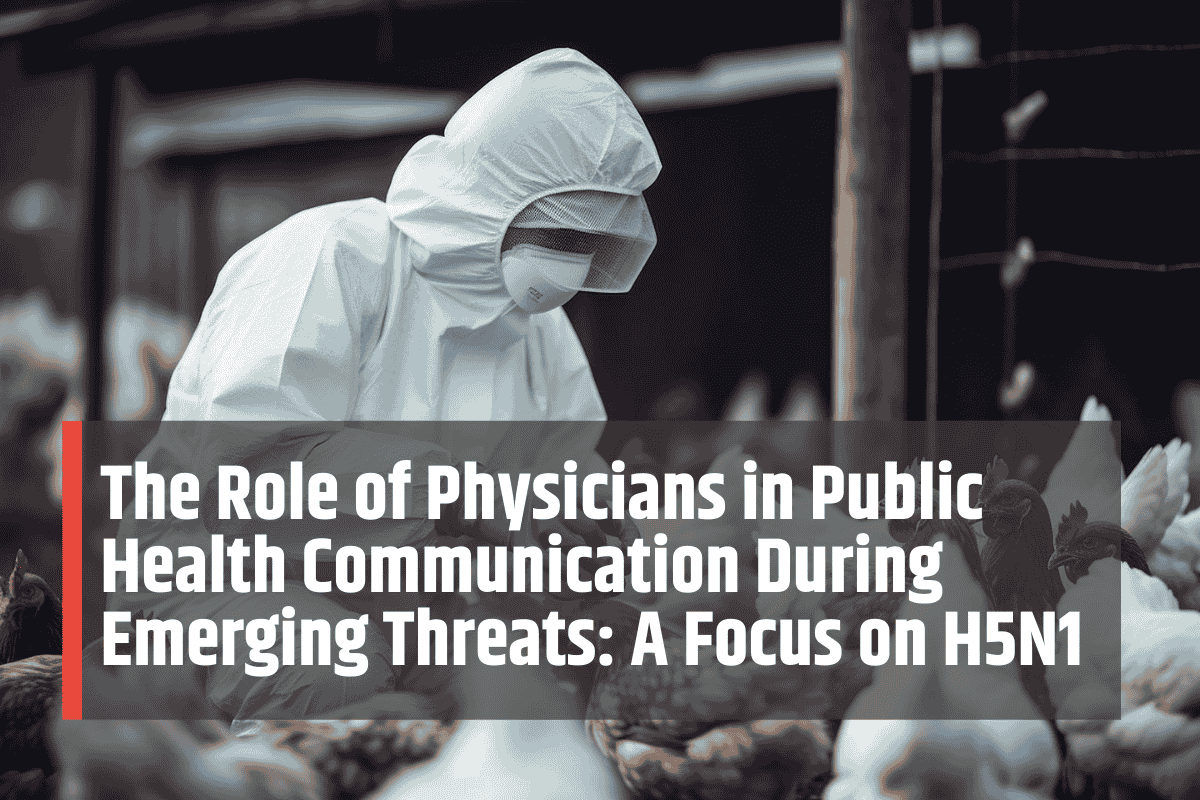
The ongoing threat of H5N1 avian influenza in humans has highlighted the need for effective public health communication. With diminished trust in government institutions, personal healthcare providers, particularly physicians, have become the most trusted sources of information during health crises.
This study examines the role of physicians as key messengers for H5N1-related health information, vaccine guidance, and interventions in the U.S.
Study Overview
Between August 5–15, 2024, a nationally representative survey was conducted to assess which sources of health information and vaccine advice were trusted by U.S. adults.
The survey focused on the role of physicians and identified sociodemographic variations in trust, particularly across urban and rural populations. Weighted logistic regressions were used to analyze associations between trust in health messengers and demographic factors.
Key Findings
- Most Trusted Health Messengers: Physicians were the most trusted source for health information, with 76.2% of respondents identifying them as their preferred messengers. Other trusted sources included personal research (36.7%) and local/state health departments (32%).
- Vaccine Advice: Physicians were also the primary source for vaccine advice (53.0%), followed by the CDC (21.7%).
- Demographic Variations: Trust in physicians was lower among Black and Hispanic respondents compared to White respondents, and there were significant differences based on age, income, ethnicity, and political affiliation.
Trust in Health Messengers: A Deeper Look
The study revealed that physicians were trusted more than governmental health organizations like the CDC and local health departments. Notably, trust in physicians increased with age and income but was significantly lower among minority groups.
Rural populations showed a stronger preference for trusting their physicians, particularly those aged 45 and older.
- Trust by Age and Income: Older adults (35 and above) and those with higher incomes showed higher trust in physicians as health information sources.
- Trust by Ethnicity: Black and Hispanic respondents had lower trust in physicians compared to White respondents, highlighting ethnic disparities in public trust.
- Urban vs. Rural Differences: Trust in physicians was generally consistent across urban and rural areas, although rural populations showed a statistically significant higher trust in their personal healthcare providers.
Disparities in Vaccine Advice
When it came to vaccine advice, physicians were the most trusted source for all demographic groups. However, there were differences in trust based on political affiliation and ethnicity.
- Political Affiliation: Republicans and Independents were more likely to trust their physician for vaccine advice, whereas Democrats showed a stronger preference for advice from the CDC or local health departments.
- Ethnic Variations: Hispanic and Black respondents were less likely to seek vaccine advice from their physicians compared to White respondents, further underscoring the need for targeted communication strategies.
Implications for Public Health Communication
This study underscores the critical role of physicians in public health communication, particularly as trusted messengers during emerging threats like H5N1.
With the public’s growing mistrust of government health agencies, physicians offer a reliable and credible alternative for disseminating health information.
- Challenges in Trust: The lower trust levels among minority populations highlight the need for public health strategies that address ethnic and racial disparities in trust. Physicians must be supported with clear, consistent messaging to effectively communicate emerging health risks, especially in diverse communities.
- Addressing Vaccine Hesitancy: Given that physicians are the most trusted source of vaccine advice, public health campaigns should leverage their influence while acknowledging the differing trust levels based on sociodemographic factors. Tailored strategies are essential to engage communities that may be more hesitant about vaccines.
Limitations and Further Research
While this study provides valuable insights, several limitations should be considered. First, the study relied on self-reported data, which may be subject to bias, particularly in relation to trust in health messengers.
Additionally, healthcare providers include more than just physicians, so further research should examine trust in nurses, physician assistants, and other healthcare professionals.
Another limitation is the reliance on phone, text, and online panels, which may have excluded certain populations, particularly those without reliable internet access.
Future research should focus on understanding the relative trust in different healthcare professionals and how regional healthcare infrastructure impacts communication effectiveness.
Physicians are emerging as vital messengers in public health, particularly for emerging threats like H5N1, where trust in government sources may be eroded. This study highlights the importance of leveraging the trusted status of physicians while addressing disparities in trust across different demographic groups.
Public health strategies must be multifaceted, engaging both traditional and non-traditional messengers, to ensure effective and equitable communication, particularly in response to vaccine guidance and emerging health risks.